Friday, February 8, 2019

Physical/Movement Development Milestones for 2 Year-Olds

By Sharon Rose


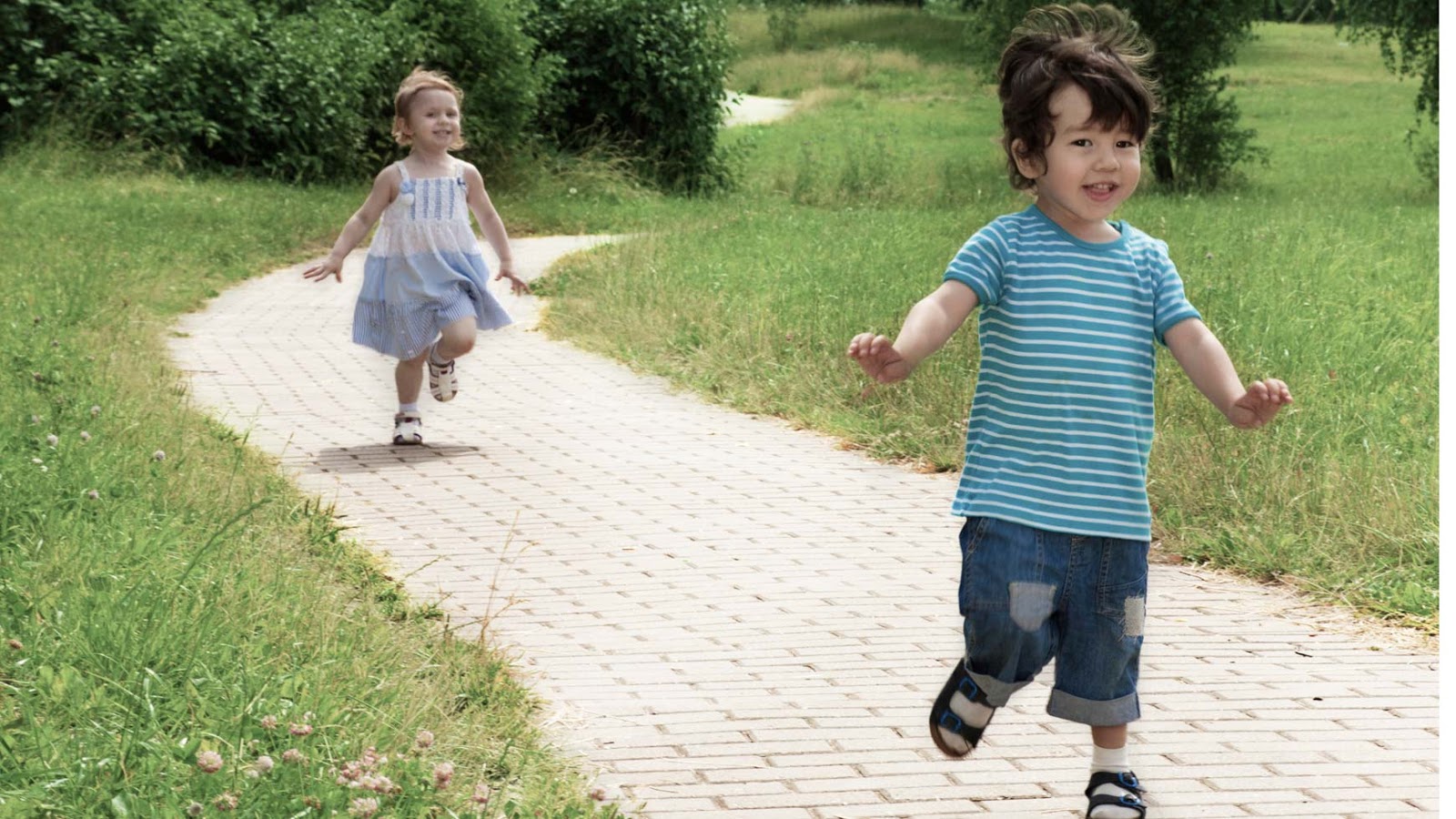
        Most babies walk between the ages of 9 - 12 months, however, it is perfectly normal for babies not to walk until they are 14 to 17 months.  By the time you experience the first year of walking with your toddler, and he turns 2 years-old, he is beginning to run.  I was so excited at the prospect of my first baby, a son, walking!  When the ‘walking’ milestone time was near, I didn’t want him out of my sight for a moment, because I didn’t want to miss seeing his first steps.  He walked at 9 months!  I was lucky to be there to see him step away from the table in our living room.  He had pulled himself into a standing position and circled the table for a month. Then, suddenly, he stepped away!  He looked as surprised as I did!  That same excited, watchful, but worrisome feeling followed with my second and third child, both daughters.  Many parents miss the moment of those very first steps becaue it could happen at any time in the milestone life of a toddler.  Parents have to get their energy level up with all the exploring and play that goes on as your toddler approaches 2 years-old.  At 2 years-old the toddling walk will start to become more confident and the running and jumping will start.  Get ready for more excitement!  Here’s what else you should expect during the year of the 2 year-old. 


Physical/Movement Milestones of the 2 Year-Old:

1.   Can feed themselves well, but still needs to work on neatness. 
2.  Beginning to run and jump. 
3.  Can walk up and down stairs holding a  rail. 
4.  Can kick a ball.
5.  Climbs onto and down from furniture without help.
6.  Draws circles and straight lines.
7.  Can build a tower of 4 blocks or more. 
8.  Throws ball overhand. 
9.  May start to use one hand more than the other. 
10. Stands on tiptoes.
11. Mostly plays beside other children, but is beginning to include other
      children in chasing games.


      As your toddler starts to use his whole body to carry out gross and fine motor skills, you can count on your 2 year-old becoming better at climbing and taking advantage of this skill to sit down in a chair and climb on other furniture. At this stage, it is a time that parents must pay even closer attention to safety issues.  Accidents happen with bookshelves that can fall over on a child, and household chemicals that are not out of reach of a toddler who can climb.  So, securely attach bookshelves, continue to use baby safety gates, and give your 2 year-old close supervision.  You’ve heard the phrase, “They are so quick!”  


      Parents are the best playmates for their 2 year-old!  This is a stage that will really take you back to your memories of being a child.  Playing with your child at the park on the swings, on the slide, and playing ball.  


Copyright, Physical/Movement Development Milestone of the 2 Year-Old, Sharon Rose, Parents Want to Know 101, February 8, 2019. All rights reserved.


Thursday, January 31, 2019

Winter Weather Safety: Protect Your Child from Frostbite and Hypothermia

    By Sharon Rose   


      Building a snowman is a great childhood memory of mine.  In many cities, snow is falling and children are excited to play in it. Our children should be dressed properly, and parents must decide if the temperature is too low, or not, for your child to play in. 

      Frostbite is the freezing of superficial tissues of the face, ears, fingers and toes.  Signs and symptoms include: numbness, pain, tingling, burning, skin turns hard and white, skin starts to itch, skin starts to peel or blister, etc. 


Always remember to wear gloves in snow and freezing temperatures. Frostbite can occur. 

      Hypothermia is a more severe reaction to exposure to cold, is defined as a significant drop in body core temperature.  Symptoms of hypothermia includes: shivering; as well as, intense shivering, lack of coordination and sluggishness; cold sensation, goosebumps, confusion, and numbness; difficulty speaking, mental confusion, stumbling, depression; unconsciousness; trouble seeing; etc. *Check out more symptoms, safety tips, and how to treat frostbite and hypothermia at our ‘source,’ to keep our children and yourself safe, in the winter weather.  If either is suspected, call 911.  Bundle up and dress for the weather! 


Copyright, Winter Weather Safety: Protect Your Child from Frostbite and Hypothermia, Sharon Rose,
Parents Want to Know 101, January 31, 2019.  All rights reserved. 


Tuesday, January 15, 2019

Language in Toddlers: Milestone Year, Age 2


By Sharon Rose


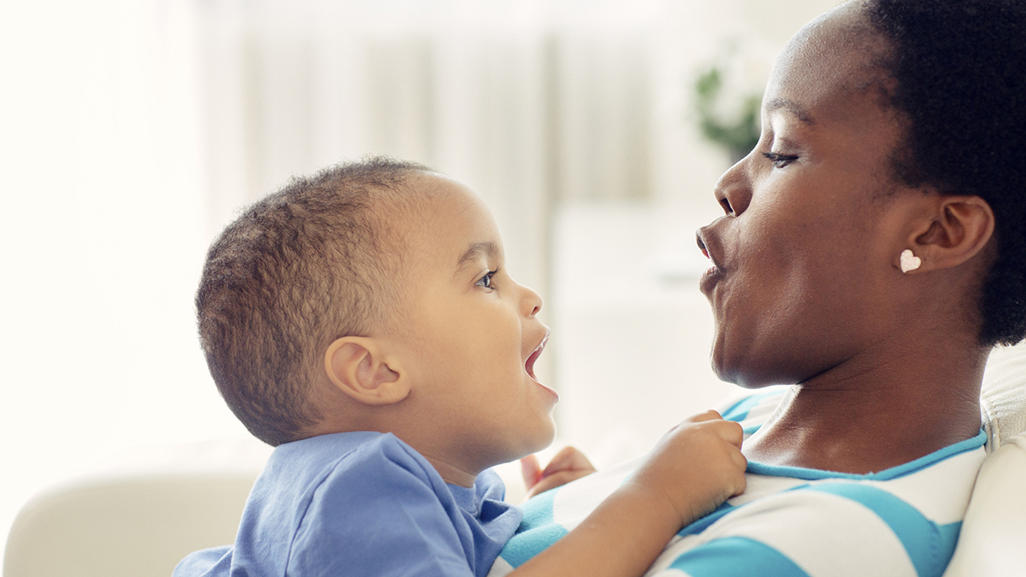
      Let’s talk about language in the milestone year, age 2.  This will be a memorable year.  There will be much growth and development in independent behavior and language will be a big part of that. How exciting when your toddler starts to communicate with you!  Although every child grows and develops at their own pace, toddler speech development follows a fairly predictable path.  By age 2, your toddler should have a vocabulary of at least 50 or more words.  Several of the more common words most likely mastered are: Mommy, Daddy, juice, milk, cookie, hot, hi, bye, car, see, and ball.  Your 2 year-old should also be putting together two-word sentences, such as: “more juice.”  They are listening to you and understand much more than they can say.  Don’t use ‘baby talk!’  As well, Mom and Dad, watch what you say if you don’t want to hear it repeated.  Don’t worry about how your toddler pronounces words, that will improve in time.  However, you should be concerned if your toddler is not responding to you when you repeat something over and over again. In this case, a middle ear infection or a speech delay could be of concern.  In either case, check with your pediatrician and/or a speech-language pathologist.  A health care professional can help parents understand the difference in a ‘late talker,’ which children grow out of, and developmental issues, such as autism and cerebral palsy.  

      Gestures are also a part of language development.  Out stretched arms, which signals, “Pick me up,” is one of the first gestures babies use, early, in language development.  You may find that your toddler does a lot of pointing.  For example: If he points to the refrigerator, ask, "Do you want something to drink?" (Wait for a response.) Then say, “Do you want juice?  


(Wait for a response.)  You say, “Ok, let’s get some juice."  Interactions matching their gestures with your verbal responses are behaviors that will encourage your toddler to respond and participate in conversations.  Further, encourage this by playing gesture-games, like ‘Pat-a-Cake,’ and ‘So-Big.’  Help your toddler learn the appropriate words for body parts, pictures in books, objects, and familiar people: "Where is your ear?", “Where is your nose?”, “Show me the ball," and "Where is Mommy?"  Educational toys and books are great tools to help encourage language, naturally, without seeming to instruct or push.  Play time and story time can become a fun part of your toddlers day, as you see their language grow right before your eyes!  


Copyright, Language in Toddlers: Milestone Year, Age 2; Sharon Rose, Parents Want to Know 101; January 15, 2019.  All rights reserved. 

Tuesday, September 4, 2018

The Illinois Commitment: For Illinois College Bound Students, Fall 2019

By Sharon Rose


      FREE TUITION - College bound students and their parents are always seeking scholarships and other various means of financing a college education.  A college education has become more expensive each year.  So, here is important and welcome information for students and their parents who reside in the state of Illinois.  A new program called, Illinois Commitment, was recently introduced by the University of Illinois at Urbana-Champaign.  The university will offer FREE TUITION  to qualifying students.  Students whose combined household income is $61,000 or less can qualify for free tuition starting fall, 2019.  The university’s website states, a student qualifies for free tuition if they meet the following criteria:

1. They are an Illinois resident (parents listed on FAFSA must also be residents)
2. Their family income is $61,000 or less
3. Their family’s assets are less than $50,000
4. They are admitted as a new freshman or transfer student
5. They are under the age of 24


      This is a great opportunity that will create a brighter future for the students of Illinois.  
*For more information please visit: https://admissions.illinois.edu/commitment.


*More About, Parents Want to Know 101:


Copyright, The Illinois Commitment: For Illinois College Bound Students, Fall 2019, Sharon Rose, Parents Want to Know 101, September 4, 2018.  All rights reserved.  

Sunday, July 29, 2018

When to Start Teaching Children to Pray

By Sharon Rose


      Children can start learning to pray even before they learn to speak in coherent sentences. Proverbs 22:6 says: "Train up a child in the way he should go, and when he is old he will not depart from it." You can start by teaching a very young child to make prayer hands and saying the words of the prayer for them.  In doing so, for children as young as 12 months, (or when the child starts eating at a feeding table) you are building and reinforcing prayer as a good habit.  Once your child learns language and begins to speak, he will learn various prayers through listening to the repetition of them, for example: in the morning, at mealtime, and at bedtime.


      Children love rhyming phrases and will enjoy learning prayers that rhyme.  So, start by teaching prayers that rhyme or have poetic rhythm.  Most children learn these quickly. Your child will come to understand that praying is a part of his family's daily schedule by seeing you pray at certain times of the day.  Have children to understand that God is our helper who loves us and that praying is having a conversation with God.  Keep it simple.


Copyright - When to Start Teaching Children to Pray, Sharon Rose, Parents Want to Know 101, July 29, 2018.  All rights reserved.


Monday, July 16, 2018

6 Dinner Conversation Starters

By Sharon Rose


        Dinner conversation starters can help make eating together at the table a tradition in your household.  Table boredom, OUT!  There is promising news for strengthening family bonds, that studies show most families eat dinner at home most nights.  But I have found no clear studies as to what percentage of families are actually sitting down at the table, together, to share a meal.  Often times, TV shows and social media are a distraction, with family members scattered in various rooms at mealtime.  With this valuable old tradition, this quality time will not only strengthen relationships, but improve family nutrition.  Parents are right there to encourage children to make good food choices at the table.  Parents and children can also find a comfort level in communicating with one another.  It's a great time to find out more about one another, from how your day went, to what your dreams are.  The family will be happier and healthier!  Here is our Dinner Conversation Starter List.  Have your questions ready and add your own questions to the list.  Personalize it!  Make it fun! 


Trivia Questions:

1.   On what date was the Declaration of Independence (U.S.A.) signed?
      Answer: July 4, 1776

2.   What city is the Golden Gate Bridge located?
      Answer:  San Francisco

3.   Name a musical group, past or present, made up of family members only.
Answer: The Jackson 5, DeBarge, BeBe & CeCe Winan, Bee Gees, The Osmonds, Von Trapp Family, The Carpenters,  Ashford & Simpson, The Staple Singers, The Everly Brothers, Gladys Knight & The Pips, LMFAO, The Pointer Sisters, Sister Sledge, The Ronettes, The Isley Brothers, Hanson Band, The Jonas Brothers, and more.


Choices Questions: 

4.  Do you prefer dogs or cats?

5.   What genre movies or TV do you prefer: dramas, comedy, or adventure and action? 

6.   What is your dream career?  


Copyright, Family Dinner Conversation Starters, Sharon Rose, Parents Want to Know 101, July 16, 2018.